Recovery Practices
Seven-Day Burnout Recovery Plan
The pattern needs a week of observation and small changes before a bigger choice. Use it to choose one next action for seven-day burnout recovery plan.
Recovery PracticesUpdated 2026-07-05
How to use this page
Read this as a sorting choice, not a label.
Use the notes below to decide what this page can change, what it should not be used for, and when reading should turn into support or a bounded workplace action.
Use seven-day burnout recovery plan as a recovery-design cue, not a.
Do not create a recovery plan that requires ideal conditions.
Bring in qualified support if safety, daily functioning, health, legal, benefits, HR, or employment-rights questions enter the picture.
Losing interest in workCompare seven-day burnout recovery plan with the 21-40 score-band interpretation.Take the Burnout Pattern TestUse the test when seven-day burnout recovery plan needs a structured path through the burnout content network.Active burnout patternCompare seven-day burnout recovery plan with the 41-60 path when that score band best explains the same work scene.
Page conclusion
What this page should change
Start with seven-day burnout recovery plan: write one dated work scene, choose one lever, then use the linked score band before reading another path.
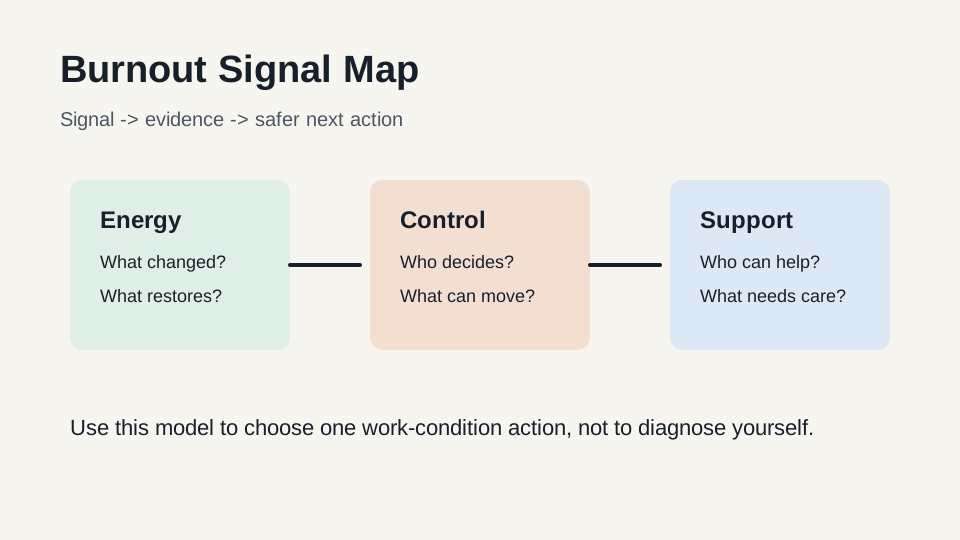
burnout signal map
Seven-Day Burnout Recovery Plan signal map
Move from the visible work scene to the mechanism, one lever, and a review point.
Work conditionSignal intensity
Write the concrete moment.
Name the repeated work condition.
Test one bounded change.
Compare against the score band.
Use seven-day burnout recovery plan as a recovery-design cue, not a demand to perform harder. For seven-day burnout recovery plan, record the scene, compare it with the closest score band, and test one bounded next step before making a larger conclusion.
Do not create a recovery plan that requires ideal conditions; burnout plans fail when they ignore the current calendar.
Pick one drain, one support conversation, and one protected recovery block for the next seven days.
The page is useful only if it changes the next work move, support move, or recovery review.
01
Recovery Practices
What this reset is for
Seven-Day Burnout Recovery Plan starts with this concrete work scene: On Monday you know the week is already heavy, so you need a plan that fits around meetings, deadlines, and real constraints. Seven-Day Burnout Recovery Plan becomes useful evidence when it repeats across real work moments. Seven days is long enough to notice repeated drains without turning the plan into another demanding project.
For seven-day burnout recovery plan, name the scene, reduce one friction point, and decide whether the pattern belongs in Losing interest in work. The important move is to hold the signal close to the work context before deciding what it means. Use this section to define seven-day burnout recovery plan as a work-pattern signal before it hardens into a story about character, loyalty, or capability.
The useful evidence is the repeated work scene, the demand around it, and the way attention, patience, or energy changes afterward. Keep the judgment narrow: one scene can point to workload, control, support, recognition, fairness, recovery, or values without proving the whole job is broken. A good first read asks what the work keeps asking for, what resource is missing, and which linked page can test that hypothesis.
Stop this section before it becomes a diagnosis, a blame exercise, or a permanent quit-or-stay verdict.
Work scene
What this reset is for scene for Seven-Day Burnout Recovery Plan: On Monday you know the week is already heavy, so you need a plan that fits around meetings, deadlines, and real constraints.
Name the exact seven-day burnout recovery plan work scene before choosing a label.
Capture the work item, channel, person, deadline, or recovery gap.
Keep diagnosis, treatment, and rights questions outside this page.
- Name seven-day burnout recovery plan as a work-pattern signal, not a verdict about character or capability.
- Use the concrete scene: On Monday you know the week is already heavy, so you need a plan that fits around meetings, deadlines, and real constraints.
- Compare the signal with Losing interest in work before reading more broadly.
- Avoid the shortcut: Do not create a recovery plan that requires ideal conditions; burnout plans fail when they ignore the current calendar.
Next actionWrite one dated note about seven-day burnout recovery plan, then use Losing interest in work if this module matches the same work scene.
02
Recovery Practices
When to use it during the week
Seven-Day Burnout Recovery Plan usually becomes visible through observable moments rather than abstract mood language. The pattern needs a week of observation and small changes before a bigger choice. The reader should look for the channel, person, deadline, meeting, or recovery gap where the pattern keeps returning.
Use this section to make seven-day burnout recovery plan visible in ordinary work artifacts: the calendar block, the message thread, the handoff, the deadline, or the moment after a meeting ends. The pattern matters when the same channel, person, task type, time of day, or recovery gap keeps carrying the signal. Write what happened before the reaction, what the reaction changed, and whether the same scene appeared more than once this week.
That observation keeps the page practical: the reader can compare a symptom page, a cause page, or a workplace-action page instead of trying to explain the whole life story. If the signal is intense, unsafe, or disrupting basic functioning, the next step should include qualified support rather than more private reading.
Work scene
When to use it during the week scene for Seven-Day Burnout Recovery Plan: On Monday you know the week is already heavy, so you need a plan that fits around meetings, deadlines, and real constraints.
Check where seven-day burnout recovery plan appears repeatedly, not only how it feels.
Record what happened before the reaction and what changed after.
Use help sooner if sleep, safety, or daily functioning is affected.
- Look for where seven-day burnout recovery plan appears: inbox, meeting, deadline, shift, manager message, customer call, or after-hours loop.
- Record what happened before the reaction and what changed after it.
- Separate a one-off hard day from a repeated pattern across the week.
- Use this evidence before choosing a recovery or workplace-action page.
Next actionWrite one dated note about seven-day burnout recovery plan, then use Active burnout pattern if this module matches the same work scene.
03
Recovery Practices
Why recovery alone may not be enough
Seven-Day Burnout Recovery Plan can come from more than motivation. Decide whether seven-day burnout recovery plan is a watch point, an active burnout pattern, or a support-threshold signal. The point is to compare work conditions before turning the page into self-blame or a dramatic quit-or-stay choice.
Use this section to move seven-day burnout recovery plan away from self-blame and toward the work conditions that may be recreating it. Burnout-facing pages should compare demand, control, reward, fairness, values, support, recovery, and role clarity before telling the reader to simply be more positive. The mechanism may be structural, personal, relational, or mixed, so the page should not force one explanation too early.
A stronger question is: which condition keeps returning even after a normal night of sleep, a weekend, or one small reset? The answer should point the reader to a workload, recovery, support, or choice page, not to a promise that insight alone fixes the problem.
Work scene
Why recovery alone may not be enough scene for Seven-Day Burnout Recovery Plan: On Monday you know the week is already heavy, so you need a plan that fits around meetings, deadlines, and real constraints.
Ask which work condition may be recreating seven-day burnout recovery plan.
Compare workload, control, fairness, values, recovery, and support.
Do not use this as legal, HR, medical, or therapy advice.
- Check workload, control, recognition, fairness, values, recovery, and available support.
- Ask which condition keeps recreating seven-day burnout recovery plan, not only how to feel better for an hour.
- Treat personal practices as support, not a substitute for fixing work conditions.
- Keep legal, medical, mental health, benefits, or policy questions with qualified support.
Next actionWrite one dated note about seven-day burnout recovery plan, then use High-friction work pattern if this module matches the same work scene.
04
Recovery Practices
What happens when recovery stays vague
Seven-Day Burnout Recovery Plan can become more costly if it stays unnamed. The pattern may spread from one work moment into attention, recovery, conversations, and choice quality. The page cannot predict the future, but it can help the reader notice when the cost is no longer small.
Use this section to name the cost of leaving seven-day burnout recovery plan vague, while avoiding scary certainty or deterministic prediction. The signal may spread through attention, evenings, meetings, patience, body tension, avoidance, or the quality of job choices. The page should ask what is already becoming harder: starting work, finishing work, responding calmly, recovering after work, or asking for support.
That review creates a threshold for action before the pattern becomes the only lens through which the reader sees the job. When the pattern is persistent, severe, unsafe, or tied to health, rights, benefits, or daily functioning, article-only guidance is no longer enough.
Work scene
What happens when recovery stays vague scene for Seven-Day Burnout Recovery Plan: On Monday you know the week is already heavy, so you need a plan that fits around meetings, deadlines, and real constraints.
Choose the point where seven-day burnout recovery plan needs support, not more reading.
Watch spread into evenings, weekends, meetings, or work choices.
Bring in qualified support when the cost is persistent or unsafe.
- Watch whether seven-day burnout recovery plan spreads into more meetings, evenings, weekends, job-search thoughts, or team withdrawal.
- Do not wait for the pattern to become dramatic before naming the cost.
- Escalate support when the signal is persistent, severe, unsafe, or affecting daily functioning.
- Use linked pages to choose a bounded next move instead of reading indefinitely.
Next actionWrite one dated note about seven-day burnout recovery plan, then use Burnout Recovery Practices if this module matches the same work scene.
05
Recovery Practices
What to protect this week
Seven-Day Burnout Recovery Plan needs a next move that is specific enough to complete this week. Use the action section as a bounded experiment for seven-day burnout recovery plan, then review the same work scene against Losing interest in work. The reader should avoid the shortcut: Do not create a recovery plan that requires ideal conditions; burnout plans fail when they ignore the current calendar.
Use this section to turn seven-day burnout recovery plan into one bounded experiment rather than another long reading session. The action should fit inside a normal workweek: one note, one request, one boundary, one recovery cue, one support conversation draft, or one review date. Choose the move that changes the work scene itself, not the move that only makes the reader feel briefly productive.
After the action, compare the same scene again so the review is concrete: did the demand shrink, did control improve, did recovery return, or did support become clearer? If nothing moves, the next step should escalate from private reflection to workplace support, qualified support, or a broader career-choice page.
Work scene
What to protect this week scene for Seven-Day Burnout Recovery Plan: On Monday you know the week is already heavy, so you need a plan that fits around meetings, deadlines, and real constraints.
Pick one seven-day burnout recovery plan action you can review within seven days.
Write what you asked, protected, reduced, or reviewed.
If nothing moves, escalate to workplace or qualified support.
- Do this first: Use the action section as a bounded experiment for seven-day burnout recovery plan, then review the same work scene against Losing interest in work.
- Keep the experiment small enough to complete during a normal workweek.
- Write a review note before opening another article.
- Choose one linked path that changes what you ask, protect, reduce, or review.
Next actionUse the action section as a bounded experiment for seven-day burnout recovery plan, then review the same work scene against Losing interest in work. Then open Burnout Pattern Test and compare the same scene before reading more.
06
Recovery Practices
What restored capacity looks like
Seven-Day Burnout Recovery Plan improves when the same work scene becomes easier to sort, discuss, reduce, recover from, or review. Improvement does not mean work becomes perfect; it means the next request, meeting, or evening recovery has a clearer boundary. Use this section to describe improvement in seven-day burnout recovery plan without pretending work becomes inspiring overnight.
The first improvement may be quieter: a request feels sortable, a meeting does not dominate the evening, a task has a visible stop point, or a conversation has a clearer ask. Look for whether recovery starts restoring something and whether the reader can separate one hard week from the entire career. Keep the same work scene as the comparison point so improvement is not measured by mood alone.
If the page helps the reader choose the next support, workload, recovery, or choice step with less panic, it has done its job.
Work scene
What restored capacity looks like scene for Seven-Day Burnout Recovery Plan: On Monday you know the week is already heavy, so you need a plan that fits around meetings, deadlines, and real constraints.
Compare the same seven-day burnout recovery plan scene after the next review.
Look for clearer sorting, less replay, or more realistic support.
One better day does not cancel support you still need.
- Look for a small change in how seven-day burnout recovery plan lands, not perfect enthusiasm or instant certainty.
- Improvement may show up as clearer sorting, less after-hours replay, or a more realistic support conversation.
- If nothing changes, move from private reading to workplace support, qualified support, or a career-choice boundary.
- Keep the same work scene as the comparison point so the review is not vague.
Next actionWrite one dated note about seven-day burnout recovery plan, then use Follow the related burnout path if this module matches the same work scene.
Reading map
Choice path
- 1Name
Name the concrete work scene behind seven-day burnout recovery plan before turning the page into a verdict about yourself or the job.
Open this step - 2Test
Use the Burnout Pattern Test if seven-day burnout recovery plan needs a score-band guide before you open more articles.
Open this step - 3Compare
Compare seven-day burnout recovery plan with the closest score-band page while keeping the same recent work scene in view.
Open this step - 4Act
Complete one workplace, recovery, mind-body, or support action tied to seven-day burnout recovery plan before continuing the reading path.
Open this step - 5Review
Review the same signal in seven days and move to qualified or workplace support if seven-day burnout recovery plan stays heavy.
Open this step
Practice and scriptsOpen examples, prompts, and edge cases after the main read.
Practice steps
- Separate signal from storyThe pattern needs a week of observation and small changes before a bigger choice. The story may say the whole job is impossible or that you are failing. The signal is narrower: a repeated work scene, a cost, and a condition that may be changed or supported.
- Choose the smallest leverSeven-Day Burnout Recovery Plan needs a lever that is small enough to test during a normal workweek. Keep the experiment tied to one scene so the review is based on evidence rather than hope.
Edge cases
Keep seven-day burnout recovery plan focused on work conditions, then use qualified support for personal health, safety, legal, or financial questions.
Do not wait for a perfect seven-day burnout recovery plan score. Use a trusted person, workplace support channel, medical or mental health professional, or emergency resource when needed.
Worked example
On Monday you know the week is already heavy, so you need a plan that fits around meetings, deadlines, and real constraints.
In the next matching work scene, apply the page's smallest lever for seven-day burnout recovery plan and write down what changed before opening another path.
The reader has a specific seven-day burnout recovery plan observation, one work lever to test, and a score-band page to compare instead of another vague conclusion.
Seven-Day Burnout Recovery Plan worksheet
- Write the exact seven-day burnout recovery plan work moment, not a general feeling.
- Name the demand, deadline, channel, or person involved in seven-day burnout recovery plan.
- Choose the smallest next action that changes the work condition or recovery window behind seven-day burnout recovery plan.
- Review seven-day burnout recovery plan after one week and decide whether support is needed.
This keeps the conversation specific to work impact and avoids forced private disclosure.
QuestionsOpen specific questions for this page.
Is seven-day burnout recovery plan always burnout?
No. This page treats it as an occupational work-pattern signal, not a diagnosis.
What is the first safe step?
Use the page's first action as a small work-pattern experiment, then record the scene and compare it with Losing interest in work.
What should I write down before acting?
Write the specific work scene, the demand or channel involved, the reaction, the small action tried, and what changed afterward.
When should this move beyond private reading?
Move beyond private reading when the pattern is persistent, intense, unsafe, or affecting sleep, mental health, daily functioning, work rights, benefits, or major life choices.
Which page should I open next?
Compare this page with Losing interest in work, then choose a symptom, cause, recovery, workplace action, mind-body support, or career choice path that matches the same work scene.
Next page
Choose the next page that changes what you do.
Losing interest in workCompare seven-day burnout recovery plan with the 21-40 path when that score band best explains the same work scene.Active burnout patternCompare seven-day burnout recovery plan with the 41-60 path when that score band best explains the same work scene.High-friction work patternCompare seven-day burnout recovery plan with the 61-80 path when that score band best explains the same work scene.Burnout Recovery PracticesReturn to the Recovery Practices hub when seven-day burnout recovery plan needs sibling pages instead of a standalone answer.
Real work scenario
Close with one action
Use the work scene above to choose one bounded move, then open the next page instead of rereading the whole page.
Boundary
This guide is educational self-reflection for work patterns, not a diagnosis, not medical or psychological advice, and heavier or persistent concerns belong with qualified support.
Seek qualified support promptly when seven-day burnout recovery plan is intense, persistent, unsafe, or tied to mental health, medical, legal, benefits, or employment-rights concerns. Move beyond private reading when seven-day burnout recovery plan is persistent, intense, unsafe, or affecting sleep, health, daily functioning, benefits, employment rights, or major choices; use qualified professional, workplace, emergency, or trusted support as appropriate.
Source notes and limitsOpen source notes and review limits.
Used for the boundary that burnout is framed here as an occupational phenomenon, not a medical diagnosis.
Used for public-facing descriptions of job burnout signs, possible causes, and non-urgent self-reflection steps.
Used for healthy workplace, support, workload, and psychological safety context.
Used only as an editorial quality guardrail for usefulness, not as evidence for health or employment claims.